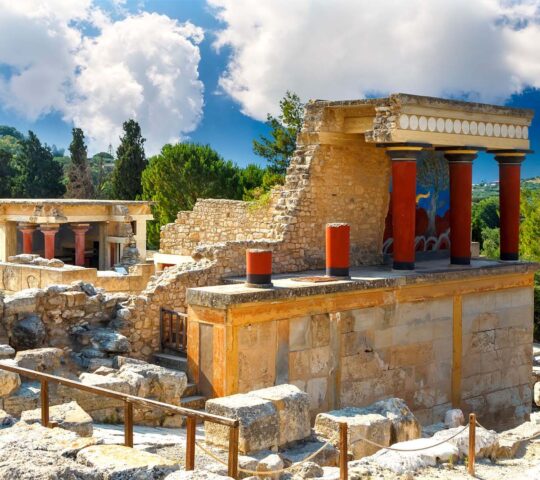
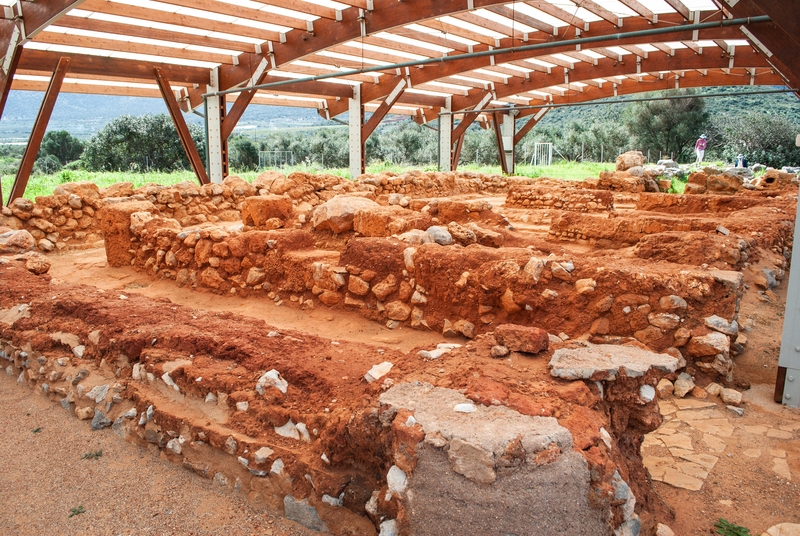
The Minoan palace of Malia was discovered in 1915 by the French archaeologist Henri Pittard. His excavations revealed significant aspects of the site, which provided valuable insights into Minoan civilization. Subsequent excavations and research were conducted by other archaeologists, contributing to our understanding of the palace’s architecture, art, and its role in Minoan culture
Architecture: The palace complex showcases typical Minoan architectural features, including large courtyards, sophisticated storage facilities, and multi-storied buildings. It has a layout centered around a large central courtyard that is surrounded by various rooms serving different functions, including administrative, residential, and ceremonial purposes.
Size and Structure: The Malia palace is somewhat smaller than the palace of Knossos but exhibits a similar layout and many of the same architectural elements. It has several distinct areas, including the West Wing, East Wing, and North Wing.
Date: 1800–1700 BC (Middle Minoan Period
The bronze dagger:
The dagger was discovered at Malia, an important Minoan administrative and economic center. Its elaborate decoration suggests it belonged to an elite individual, possibly a noble, warrior, or religious figure.
Date: 1800–1700 BC (Middle Minoan Period)
famous Malia Pendant was found there. Excavated by Demargne, finds included a kernos (speculated to be a libation table) with two rings of cup holders.