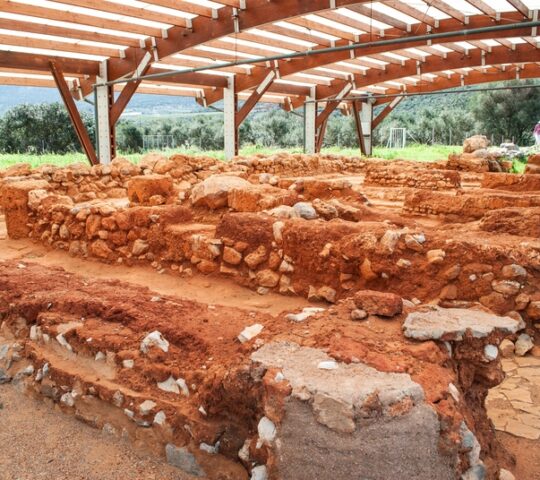
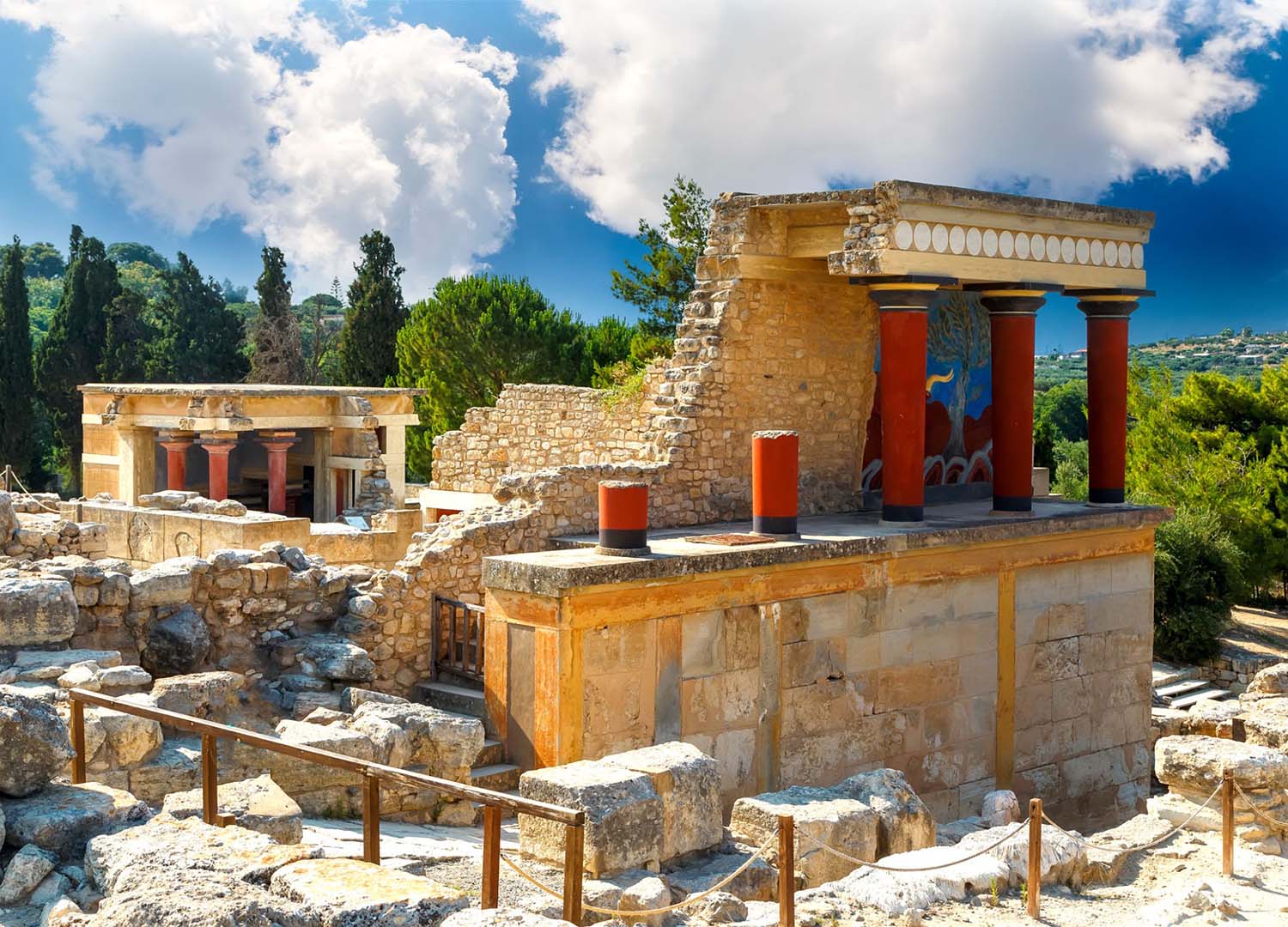
The Minoan Palace of Knossos, located on the island of Crete, is one of the most significant archaeological sites related to the ancient Minoan civilization, which flourished from approximately 2600 to 1100 BCE. The palace complex, believed to have been built around 1900 BCE and later rebuilt after a major earthquake around 1700 BCE, serves as a crucial piece of evidence for understanding Minoan culture, architecture, and social organization.
Architecture of the Palace
The architectural features of the Palace of Knossos are remarkable and reflect the sophistication of Minoan civilization. The Palace of Knossos is a multi-level structure, with various sections built on different levels to accommodate the hilly terrain of Crete. This design allowed for the incorporation of natural light and ventilation, critical for the large and densely packed areas. The layout of Knossos is intricate and labyrinthine, which is thought to have inspired the myth of the labyrinth associated with the Minotaur. Rooms and corridors are interconnected in a way that often lacks a clear, linear path, making navigation complex.
A large central courtyard is a prominent feature, serving as an open gathering space for various activities including religious ceremonies, gatherings, and possibly sporting events. This courtyard allowed for the integration of indoor and outdoor spaces, enhancing the interaction among the palace’s inhabitants. The palace included light wells, which are openings in the roof that let in natural sunlight, illuminating the darker interior spaces. The use of these wells, along with ventilation systems, demonstrates advanced architectural thinking, allowing air circulation throughout the structure.
The columns in Knossos are distinctive, typically made of wood, and tapering from a wider top to a thinner base (an inverted design compared to classical Greek columns). These columns were often painted in vivid colors and decorated, contributing to the aesthetic appeal of the palace.
One of the most famous features is the Throne Room, which contains an alabaster throne and a stone bench, suggesting its use as a ceremonial or administrative space for leaders or priests. The room is adorned with frescoes, including motifs of griffins and lilies, that accentuate its significance.
The walls of the palace are adorned with vibrant frescoes that not only depict scenes of daily life, nature, and ritual but also serve as architectural decoration.
– Common themes include bull-leaping, marine life, and floral patterns, showcasing the artistic skill of Minoan culture.
Art and Decoration:
The palace includes large storage rooms, known as “granaries,” where goods like oil, grain, and other commodities were kept, indicating the palace’s role in economic activities. Pottery and other artifacts found in these storerooms highlight the advanced trade and storage systems of the Minoans.
Several areas within the palace complex are believed to have been used for religious practices, featuring altars and shrines, indicative of the Minoan’s spiritual life. Frescoes and findings in these spaces offer insights into Minoan religious beliefs and rituals.
-The Palace of Knossos featured advanced plumbing systems, including toilets and drainage, indicating a sophisticated understanding of hygiene and water management. Sinks and bathtubs made of clay and stone have also been found.
Knossos is often associated with the legend of King Minos, the Minotaur, and the labyrinth, making it a focal point of Minoan myth and legend. The complex may have served as a religious, political, and economic center of Minoan society. The architectural design of the Palace of Knossos illustrates the advanced engineering and artistic capabilities of the Minoans. Its layout reveals insights into the society’s complexity and sophistication, serving not only as a royal residence but also as a center of administration, commerce, and religious activity. The blend of functionality, aesthetics, and symbolic meaning makes Knossos a crucial site for understanding ancient Mediterranean cultures.
Decline:
– The palace was abandoned around 1380 BCE, likely due to a combination of factors, including natural disasters and the increased influence of Mycenaean culture. The site was later occupied by the Mycenaeans, who left their own marks on the palace.
Discovery and Excavation:
The site was rediscovered in the early 20th century by the British archaeologist Sir Arthur Evans, who undertook extensive excavations and restoration projects. Evans began digging at Knossos in 1900 after acquiring land that included the ruins. He had been intrigued by the site after discovering references to it in ancient texts and his knowledge of Cretan history.
While Evans’ restoration work was groundbreaking, it has also been a point of contention, as some aspects may not accurately reflect the original Minoan design.
Arthur Evans was a British archaeologist who is best known for his excavation of the ancient palace at Knossos on the island of Crete. His work began in 1900 and continued for several years, revealing a complex and sophisticated civilization that existed during the Minoan period, around 1900 to 1450 BCE.
Evans uncovered a vast palace complex, which included multiple levels, numerous rooms, and elaborate frescoes. He identified the site as Knossos, which he believed to be the location of the legendary labyrinth associated with the Minotaur myth. His excavations provided significant insights into Minoan architecture, art, and society, showcasing advanced features such as plumbing and storage facilities.
Evans also coined the term “Minoan” to describe the civilization, named after the mythical King Minos. His methods, while groundbreaking, were sometimes controversial; he reconstructed parts of the site using modern materials, which has led to debates about the accuracy of his interpretations.
Overall, Evans’s discoveries at Knossos were pivotal in the study of Aegean prehistory and significantly contributed to our understanding of ancient Mediterranean cultures.
Certainly! Arthur Evans’s excavations at Knossos were groundbreaking and immensely influential in the field of archaeology. Here are more detailed aspects of his work and discoveries:
– Beginning of Excavations:
– Site Identification: Evans identified Knossos with the legendary city mentioned in myths, particularly the story of the Minotaur and the labyrinth. He believed the palace ruins were remnants of an advanced civilization.
Archaeological Findings
– The Palace Complex: The most remarkable discovery was the immense palace complex, which covered approximately 150,000 square feet and included multiple levels, with over 1,300 rooms. The design featured large open courtyards, storage rooms, workshops, and religious areas.
Reconstructive Efforts
– Restoration Work: Evans undertook extensive restoration work to reconstruct parts of the palace, using modern materials and techniques. This included rebuilding walls and adding replicas of frescoes. While this restoration helped visualize the site, it sparked controversy over historical accuracy and authenticity.
Cultural Significance
– Minoan Civilization: Through his findings, Evans defined the Minoan civilization as a distinct entity, separate from classical Greek culture. He identified it as the earliest known European civilization, which predated the Greeks.
– Impact on Archaeology: Evans’s work at Knossos popularized the field of Aegean archaeology and stimulated interest in prehistory and ancient civilizations. His methods and interpretations set a foundation for future archaeological endeavors.
# Later Developments
– Scholarly Debate: Over the years, Evans’s interpretations and methods have been subject to scrutiny. Critics have pointed out that his reconstructions may have projected his own ideas onto the ancient site. Nonetheless, his contribution to understanding Minoan culture remains significant.
– Continued Excavation: Excavations at Knossos and surrounding areas have continued even after Evans, yielding more information about the Minoan civilization and its connections to other cultures in the ancient Mediterranean.
In summary, Arthur Evans’s excavations at Knossos were a blend of discovery, scholarship, and reconstruction that immensely enhanced our understanding of one of the Mediterranean’s earliest advanced civilizations. His legacy endures in both archaeological practice and the broader study of ancient history.
The artifacts discovered at Knossos provide significant insights into the Minoan civilization, its daily life, culture, and artistic achievements. Here are some key categories and examples of the artifacts found at the site:
1. Pottery
– Decorated Pottery: Minoan pottery is known for its intricate designs, including floral motifs, marine life, and geometric patterns. The “Kamares ware,” characterized by its vibrant colors and fine craftsmanship, is particularly notable.
– Storage Jars (Pithoi): Large clay jars used for storage of oil, grain, or other goods were found in abundance. These jars often had wide mouths and were sometimes decorated.
2. Frescoes
– Wall Paintings: The frescoes at Knossos are among the most famous Minoan artifacts. They depict various scenes such as:
– Religious Ceremonies: Images of ritual activities and offerings.
– Nature and Wildlife: Scenes featuring lush landscapes, animals (such as dolphins and birds), and plants.
– Bull-Leaping: Iconic representations of this sport, believed to have religious significance.
The frescoes found at Knossos are among the most significant contributions to our understanding of Minoan civilization, as they provide invaluable insights into the art, culture, religion, and daily life of the Minoans. Here are some key aspects of their significance:
1. Artistic Mastery
– Style and Technique: The frescoes showcase advanced artistic techniques, including the use of vibrant colors, intricate patterns, and dynamic compositions. The skillful execution indicates that Minoan artists were highly trained and had access to significant resources.
– Naturalism: The depictions of animals, humans, and landscapes show a high degree of naturalism and attention to detail. This illustrates the Minoans’ keen observation of the natural world and their ability to represent it artistically.
2. Cultural Insights
– Religious Practices: Many frescoes depict religious scenes, rituals, and deities, providing clues about Minoan beliefs and practices. For example, frescoes showing priestesses or ritual figures suggest the importance of religious ceremonies in Minoan society.
– Daily Life and Activities: Frescoes often illustrate activities like dancing, sports (such as bull-leaping), and social gatherings, offering glimpses into everyday life and social customs. This aspect helps us understand the cultural values and societal structure of the Minoans.
3. Symbolism and Iconography
– Mythical and Symbolic Elements: Many frescoes include symbolic imagery, such as the double axe (labrys), which is believed to represent sacred authority. Such symbols help us interpret religious and societal concepts within Minoan culture.
– Natural Symbols: The use of motifs from nature, including flowers, birds, and marine life, reflects the Minoans’ connection to their environment and possibly symbolic meanings associated with fertility and renewal.
4. Architectural Context
– Integration with Architecture: The placement of frescoes within the architecture of the palace (such as in the corridors, staircases, and rooms) indicates a thoughtful integration of art and space. The context in which they were found adds depth to their meaning and significance.
– Palace Decoration: The scale and grandeur of the frescoes suggest that they were meant to decorate significant areas of the palace, reinforcing the idea of Knossos as a political and ceremonial center.
5. Influence on Later Cultures
– Aesthetic Influence: Minoan art, particularly its fresco style, influenced later Greek art and culture. The motifs, themes, and stylistic elements seen in Minoan frescoes can be traced in later Hellenistic and classical art.
– Cultural Legacy: The cultural aspects depicted in the frescoes contributed to the mythology and identity of ancient Greek civilization, particularly in how they viewed their predecessors.
6. Conservation and Study
– Preservation Challenges: The discovery and subsequent restoration of these frescoes have raised questions about conservation practices. Some frescoes were removed and transferred to museums, leading to discussions about authenticity and integrity.
– Ongoing Research: Scholars continue to study the frescoes to unlock more about the Minoan civilization, with ongoing analyses focusing on their techniques, materials, and cultural significance.
# Conclusion
In summary, the frescoes at Knossos are significant not only as masterpieces of Minoan art but also as key documents that provide insights into the religious, social, and cultural life of the Minoans. They enrich our understanding of early European civilizations and highlight the sophistication of Minoan society in ways that resonate with subsequent cultures in the region.
3. Sculptural Art
– Figurines: Small terracotta figurines of humans and animals were discovered, representing various aspects of Minoan life and beliefs. Some depict women, potentially reflecting religious or ritual roles.
The Minoan civilization, which flourished on the island of Crete from approximately 3000 to 1100 BCE, is well known for its sophisticated art and culture, including its pottery, frescoes, and figurines. One of the most significant archaeological sites associated with the Minoans is Knossos, which is often regarded as the center of Minoan culture.
# Minoan Figurines
1. Materials: Minoan figurines were typically made from a variety of materials, including clay, stone, and sometimes ivory. Clay figurines were often painted with elaborate designs.
2. Types of Figurines: The figurines vary widely in size and form, ranging from small statuettes to larger figures. They often depict human figures, particularly women, and can include representations of deities, athletes, and even animals.
3. Female Figurines: Many of the Minoan figurines represent women and are characterized by exaggerated features such as prominent breasts and detailed headdresses or garments. These figurines are often interpreted as representations of a feminine deity or goddess, perhaps linked to fertility or motherhood.
4. Male Figurines: Male figurines are less common, but they typically represent warriors or religious figures. They may be depicted with distinctive features like beards or ceremonial attire.
5. Symbolism: Minoan figurines are often seen as symbolic representations of religious or cultural beliefs. They may have been used in rituals or as offerings to deities, and their form and decoration provide insight into Minoan society, gender roles, and religious practices.
6. Artistic Style: The art style of Minoan figurines is characterized by its fluidity and attention to detail. Unlike much of the rigid and formal representations in other ancient cultures, Minoan art exhibits a sense of movement and life.
7. Findings and Context: Many figurines have been discovered in ceremonial contexts, sometimes in temples or other important sites, which suggests they may have had a religious significance. The large number of figurines found at sites like Knossos indicates their importance in Minoan culture.
Overall, Minoan figurines are a significant aspect of understanding the aesthetics, beliefs, and social structures of the Minoan civilization. They continue to be an important subject of study in the fields of archaeology, art history, and anthropology.
– Religious Symbols: The double axe (labrys), which appears in various forms, is thought to have held religious significance and was often found in architecture and art.
4. Tools and Implements
– Crafting Tools: A variety of tools were uncovered, including chisels, knives, and other implements suggesting advanced craftsmanship in stone, metal, and woodworking.
– Weights and Measures: Standardized weights, often made of metal, hint at a developed economic system and trade practices, suggesting a level of sophistication in trade.
5. Jewelry and Personal Items
– Gold and Silver Jewelry: Beautifully crafted jewelry, including necklaces, rings, and earrings, were discovered, showcasing Minoan skills in metallurgy and decorative arts.
– Seal Stones: Seals made of stone engraved with intricate designs were used for administrative purposes, likely as a form of signature or mark of ownership.
6. Tableware and Utensils
– Cup and Bowl Sets: Minoan ceramics often included finely crafted cups, bowls, and plates used in daily life and possibly in ceremonial contexts.
– Serving Utensils: Artifacts also included serving dishes and utensils, indicating the importance of feasting and communal meals in Minoan society.
7. Linear A Tablets
– Writing System: Although the script on these tablets remains undeciphered, they are among the earliest known examples of writing in Europe. The presence of these tablets indicates advanced administrative practices.
Conclusion
The artifacts recovered from Knossos not only demonstrate the artistic and technical abilities of the Minoans but also provide evidence of their social structure, religious beliefs, and daily lives. Together, they paint a richly detailed picture of a civilization that was sophisticated and influential in the ancient Mediterranean world. The ongoing study of these artifacts continues to yield new insights into Minoan culture and its legacy.
Today, the Palace of Knossos is a popular tourist destination and a vital resource for researchers studying ancient Minoan civilization and its contributions to European history. The site remains a testament to the sophistication and complexity of one of the earliest advanced cultures in Europe.